Spennymore Colliery Current Day Location
Spennymore colliery is an abandoned mine located in Mayfield East, Newcastle NSW Australia. It is one of 20 or more collieries that worked the coal in the Mayfield/Tighes Hill coal fields in the 1880s, and closed down in 1886 during the flooding disaster of the Ferndale Colliery. As these mines were interconnected, when Ferndale colliery flooded, so too did Spennymore colliery.
The Spennymore mine was completely abandoned in 1886.
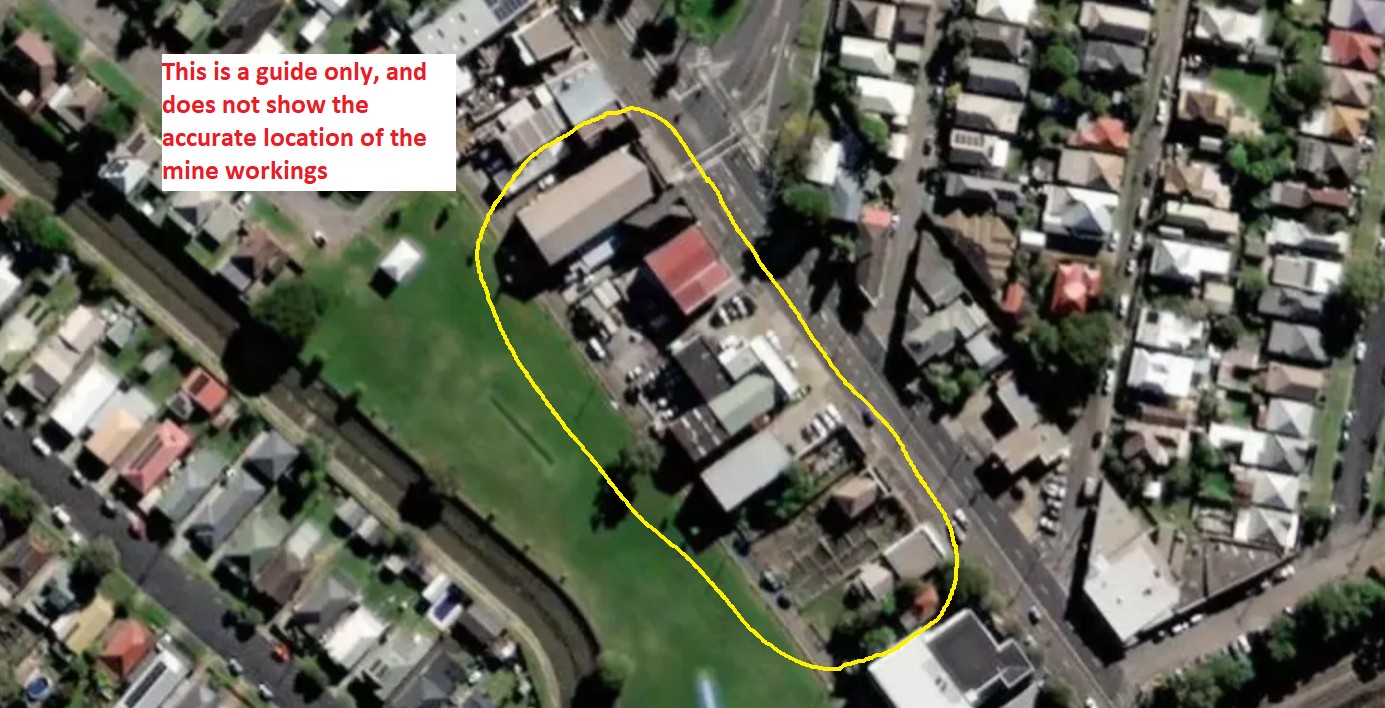
Spennymore Colliery Abandoned Mine Location
Spennymore Colliery (Spennymoor Mine) – Historic Report from the Royal Commission 1886
“These shallow coal-workings are situated on the extreme northern edge or out crop of the coalfield, and have worked small portions of the thick coal that has been preserved by the conglomerate ridge of Tighe’s Hill. These and several other small collieries were established to work corners, or small patches of thick coal, that had not been leased to the adjoining and more extensive colliery of Ferndale. The whole of these have underground communication with each other.
The approximate line of outcrop is shown on plan No. 2 to follow a curved line slightly to the south of the Maitland Road. This important thoroughfare runs along the crest of the low ridge. The narrow tidal stream known as Tighe’s Creek follows a tortuous course and sweeps along the base of this ridge a few yards south of this highway.
The Maitland Road may therefore, to all intents, be considered to mark the outcrop of the coal-field. Under it, the seam measured 18 feet in thickness, and was found at a depth of only a few feet (15 feet to the top of the seam). The coal under this throughfare was the property of Government, and so far as the Commission could discover no leases appear to have been applied for or granted to any of the owners, to entitle them to work and remove the valuable bed of mineral from under the road.
Notwithstanding, the owners of these small coal-works seem to have burrowed and worked every possible ton of mineral from under the highway, and this in defiance, it would appear, of the expostulations of the Examiner of Coal-fields and Inspector of Collieries. If this be so, the owners of these collieries were in the position of unauthorised interlopers, and were liable to the Government in damages to a serious amount.
The road has been honeycombed by coal workings. Towards the south and north, the thin pillars having part been removed, the whole surface is a tumultuous mass of open pitfalls. Looking into some of these, the surface of the Maitland Road, resting on a thin crust of sandstone very much intersected with fissures, is seen to be supported on collar pillars from 2 to 4 feet thick. In some of these pitfalls, were the surface has subsided to within a few feet of the road, the lines of fracture are seen to be defined by glassy surfaces of “greybacks” or which the following sketches may convey some ideas. In one of two instances, notably in a large cavity contiguous to Spennymoor shaft, the roof appears to have rested almost entirely on wooden chocks.
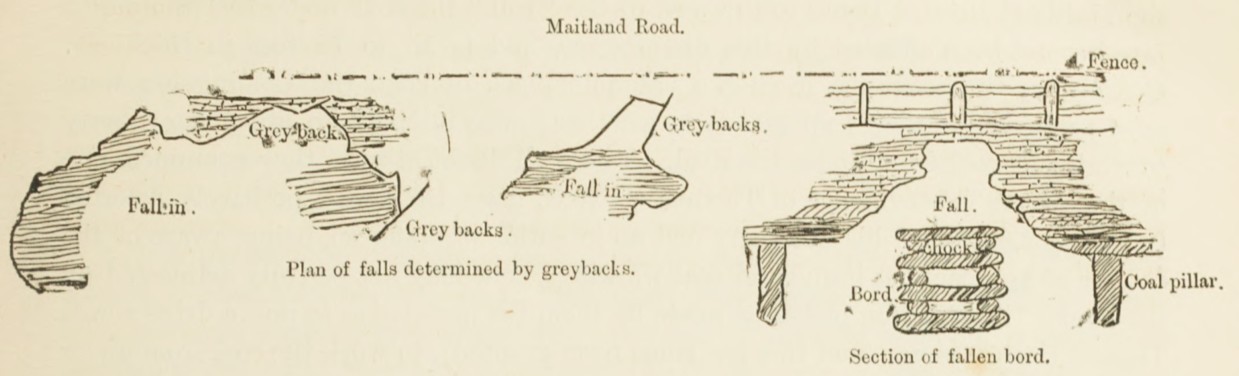
Maitland Road Spennymore Colliery
Spennymoor was the last of the small collieries that was at work, and the workings were drowned out or flooded when Ferndale was inundated. It was therefore stopped before the visit of the Commission. The thick coal crops out or comes to-day under the bed of the creek, and Lords have been driven, and pillars of diminutive size have been robbed so close to its banks, that a subsidence has taken place permitting the waters of the creek to enter the cavity. The tide rises and falls in all the pitfalls examined. So regardless have the workers of this coal been of consequences to their own or neighbours’ property, (with which they were freely communicated), that had not Ferndale been inundated, the admission of sea-water at the fallen workings of Spennymoor, referred to, almost simultaneous with the catastrophe at Ferndale, would have inundated, or at least given the owners of that colliery much trouble and concern.”
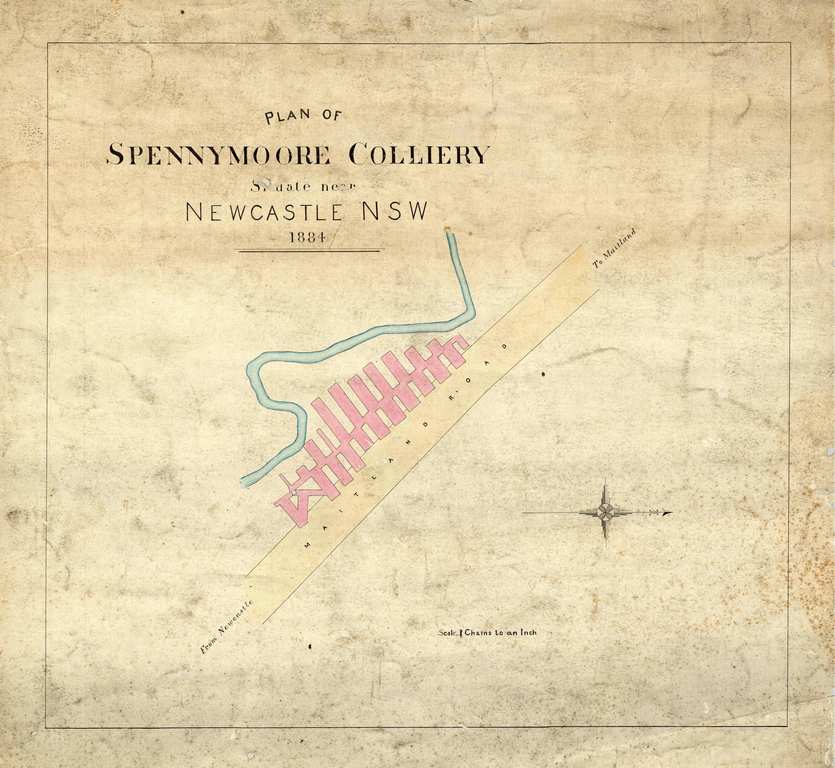
Spennymoor Spennymore Colliery Mine Map Mayfield
Mining History of Spennymore Colliery
Owners of the colliery were being constantly warned about their illegal mining practices of taking as much of the coal as possible, especially the unauthorised undermining of Maitland Road. In 1884, inspectors found the partial collapse of Maitland Road was caused by the Spennymore Colliery. Because of these workings, the Spennymore Colliery and the Ferndale Colliery are joined under Maitland Road.
When the Ferndale Colliery was flooded and abandoned in 1886, so too was the Spennymore Colliery. No remediation work has ever been done and these abandoned mines remained flooded.